

Do UAE Business Owners Qualify for the EB2 NIW? A Complete Breakdown
Introduction
In the dynamic landscape of global business, many entrepreneurs in the United Arab Emirates (UAE) are seeking opportunities to expand their operations into the United States. The EB2 NIW (National Interest Waiver) visa has emerged as a popular pathway for foreign nationals, particularly business owners, to obtain U.S. permanent residency. This visa allows qualified individuals to apply for a green card without needing a job offer from a U.S. employer, making it an attractive option for many. In this comprehensive article, we will explore the eligibility criteria specifically for UAE business owners, the benefits of pursuing this visa, and practical steps to enhance the chances of a successful application.
Understanding the EB2 NIW Visa
The EB2 NIW visa is part of the employment-based second preference category, designed for individuals who possess advanced degrees or exceptional abilities in their fields. The “National Interest Waiver” component allows applicants to bypass the labor certification process, which is typically required for employment-based visas. This waiver is granted when it is in the national interest of the United States for the applicant to work in their field.
Key Benefits of the EB2 NIW Visa
- No Job Offer Required: Unlike many other visa categories, the EB2 NIW does not require a job offer from a U.S. employer. This flexibility is particularly beneficial for entrepreneurs who wish to establish or expand their businesses in the U.S.
- Self-Sponsorship: Applicants can self-sponsor their petitions, which means they do not need to rely on a U.S. employer to file on their behalf. This is a significant advantage for business owners who may not have established connections in the U.S. job market.
- Pathway to Permanent Residency: The EB2 NIW provides a direct pathway to permanent residency (green card), allowing business owners to live and work in the U.S. indefinitely.
- Family Inclusion: The visa allows for the inclusion of immediate family members (spouse and children under 21) in the application, enabling them to also obtain permanent residency.
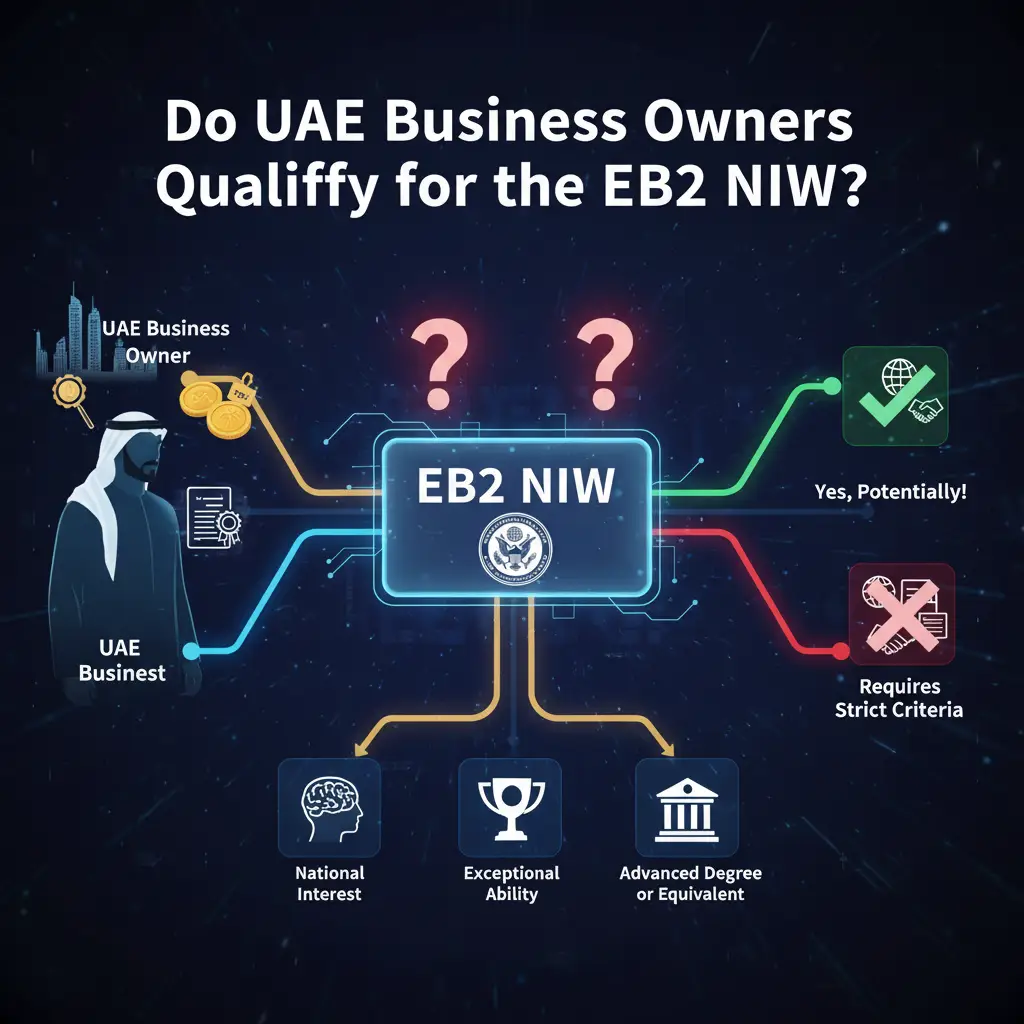
Eligibility Criteria for UAE Business Owners
To qualify for the EB2 NIW, UAE business owners must meet specific eligibility criteria. These criteria can be categorized into two main components: educational qualifications and national interest requirements.
1. Educational Background
Applicants must possess one of the following:
– An Advanced Degree: This typically means holding a master’s degree or higher from an accredited institution. For business owners, having an MBA or a similar degree can be advantageous.
– Exceptional Ability: If the applicant does not have an advanced degree, they must demonstrate exceptional ability in their field. This can be proven through:
– Significant achievements or awards in their industry.
– Membership in professional organizations that require outstanding achievements.
– Published work that has garnered attention or recognition.
2. National Interest Waiver Requirements
To qualify for the NIW, applicants must demonstrate that their proposed endeavor has substantial merit and national importance. The U.S. Citizenship and Immigration Services (USCIS) evaluates three primary criteria:
– Substantial Merit: The applicant must show that their business has the potential to benefit the U.S. economy. This could include job creation, innovation, or advancements in technology.
– National Importance: The applicant’s work should address issues of national interest, such as contributing to economic growth, improving healthcare, or enhancing education.
– Benefit to the U.S.: The applicant must prove that waiving the job offer requirement would benefit the U.S. This could involve demonstrating that the applicant’s skills and contributions are critical to the national interest.
Key Factors for Eligibility
When considering eligibility for the EB2 NIW, UAE business owners should pay attention to the following key factors:
Business Impact
The applicant’s business should have a clear and demonstrable impact on the U.S. economy. Factors to consider include:
– Job Creation: Evidence of job creation or plans to create jobs in the U.S. can significantly bolster an application. For instance, if a business owner has already hired employees or has a detailed plan to do so, this should be highlighted in the application.
– Innovation and Technology: If the business involves innovative technologies or services that can enhance the U.S. market, this can strengthen the argument for national interest.
Documentation
Proper documentation is crucial for a successful application. This includes:
– Evidence of Educational Qualifications: Transcripts, diplomas, and any relevant certifications should be included to prove educational background.
– Business Plans: A comprehensive business plan that outlines the business model, market analysis, and growth projections can demonstrate the viability and potential impact of the business.
– Letters of Recommendation: Letters from industry experts, clients, or partners that vouch for the applicant’s contributions and the importance of their work can add credibility to the application.
Market Demand
Demonstrating that there is a demand for their products or services in the U.S. market can further strengthen the application. This can be shown through:
– Market Research: Conducting thorough market research to identify potential customers and competitors in the U.S. can provide valuable insights.
– Sales Data*: If the business has already made sales in the U.S. or has contracts with U.S. companies, this information should be included.
Practical Steps for a Successful Application
To enhance the chances of a successful EB2 NIW application, UAE business owners should consider the following practical steps:
1. Conduct a Self-Assessment
Before applying, business owners should conduct a self-assessment to determine their qualifications. This includes evaluating educational background, work experience, and the potential impact of their business on the U.S. economy.
2. Develop a Strong Business Plan
A well-thought-out business plan is essential. It should clearly outline the business objectives, market analysis, operational strategies, and financial projections. The plan should also highlight how the business aligns with U.S. national interests.
3. Gather Supporting Documentation
Collect all necessary documentation to support the application. This includes:
– Educational credentials
– Evidence of business success (financial statements, tax returns)
– Letters of recommendation
– Market research data
4. Seek Legal Advice
Consulting with an immigration attorney who specializes in EB2 NIW cases can provide valuable guidance. An attorney can help navigate the complexities of the application process and ensure that all documentation is properly prepared.
5. Prepare for the Application Process
Once all documentation is gathered, prepare for the application process. This includes completing the necessary forms, paying the required fees, and submitting the application package to USCIS.
Conclusion
In summary, UAE business owners can qualify for the EB2 NIW if they meet the necessary educational and professional criteria while demonstrating the potential benefits of their business to the United States. Understanding these conditions is essential for a successful application. By preparing thorough documentation, clearly outlining the contributions of their business, and seeking professional guidance, UAE entrepreneurs can enhance their chances of obtaining this valuable visa. The EB2 NIW represents a significant opportunity for business owners to establish themselves in the U.S. and contribute to the economy while securing a pathway to permanent residency.