

When buying property in Turkey, understanding local taxes is just as important as choosing the right home. This guide helps foreign investors navigate key financial topics like property tax, rental income tax, capital gains, and double taxation laws.
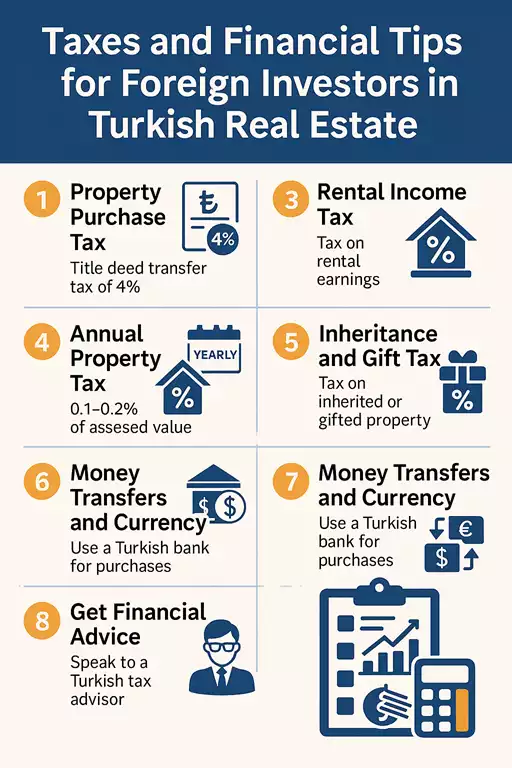
1. Property Purchase Tax in Turkey
When you buy real estate in Turkey, you must pay a one-time property purchase tax, also called the title deed transfer tax. It’s usually 4% of the official sale price. Most buyers cover this fee, but you can negotiate it with the seller.
2. Annual Property Tax for Foreigners
Foreigners who own property in Turkey must also pay annual property tax. The rate is:
- 0.1% in smaller towns
- 0.2% in major cities like Istanbul or Ankara
This tax is calculated based on the assessed—not market—value of the property.
3. Rental Income Tax in Turkey
If you rent out your property, your earnings are subject to rental income tax in Turkey. The rate starts at 15% and increases depending on your income level. However, you can deduct expenses like maintenance, insurance, and agency commissions.
4. Capital Gains Tax in Turkey
If you sell your property within 5 years, the profit may be taxed as capital gains. But if you hold the property for over 5 years, you can sell it without paying capital gains tax in Turkey.
5. Inheritance and Gift Taxes
Inherited or gifted real estate is also taxed in Turkey. Rates vary between 1% to 10% depending on your relationship with the giver or deceased person.
6. Double Taxation Agreements
Turkey has signed double taxation treaties with over 80 countries. This means you likely won’t pay tax twice on the same income—once in Turkey and once in your home country.
7. Currency Transfers and Banking Tips
- Use a Turkish bank account for property payments
- Send funds in your home currency (USD or EUR) and convert them locally
- Keep SWIFT receipts and proof of payment for legal documentation
8. Smart Financial Tips for Foreign Investors
To avoid trouble and save money, it’s best to hire a local accountant. Turkish tax laws change often. A professional can help with things like filing rental income tax and planning your property sale to reduce capital gains tax.
Conclusion
Knowing the real estate tax system in Turkey helps you protect your investment and avoid surprises. From property tax and rental income tax to double taxation rules, smart planning makes all the difference for foreign investors in Turkish real estate. For more information Just call us : Invest Globally team